Here is a professional article created based on your reference content and requirements:
Gold Market Cyclical Bottom Analysis: Technical Signals, Dollar Trends, and Catalyst Expectations
Against the complex and volatile global macroeconomic backdrop, gold, as a key safe-haven asset, has drawn significant market attention for its price movements. Recently, international gold prices experienced a notable pullback, leading to cautious sentiment. However, Paul Wang, Managing Partner and Market Strategist at Sprott SII in Canada, has offered a thought-provoking assessment: based on multiple technical indicators, the gold market may have entered a "severely oversold" state and could form a cyclical price bottom between August and September 2026. This view provides a guiding light for the currently subdued gold market.
Technical Indicators Signal a Bottom, Seasonal Factors May Offer Entry Opportunities
In his latest analysis, Paul Wang points out that key technical indicators measuring overbought/oversold conditions have issued strong signals. When nearly all indicators point to oversold territory, it does not necessarily mean prices have absolutely bottomed, but it typically indicates that the most intense wave of selling may be nearing its end. More importantly, this market structure often suggests that large funds or forward-looking institutional investors are quietly seeking entry opportunities, accumulating strength for the next uptrend.
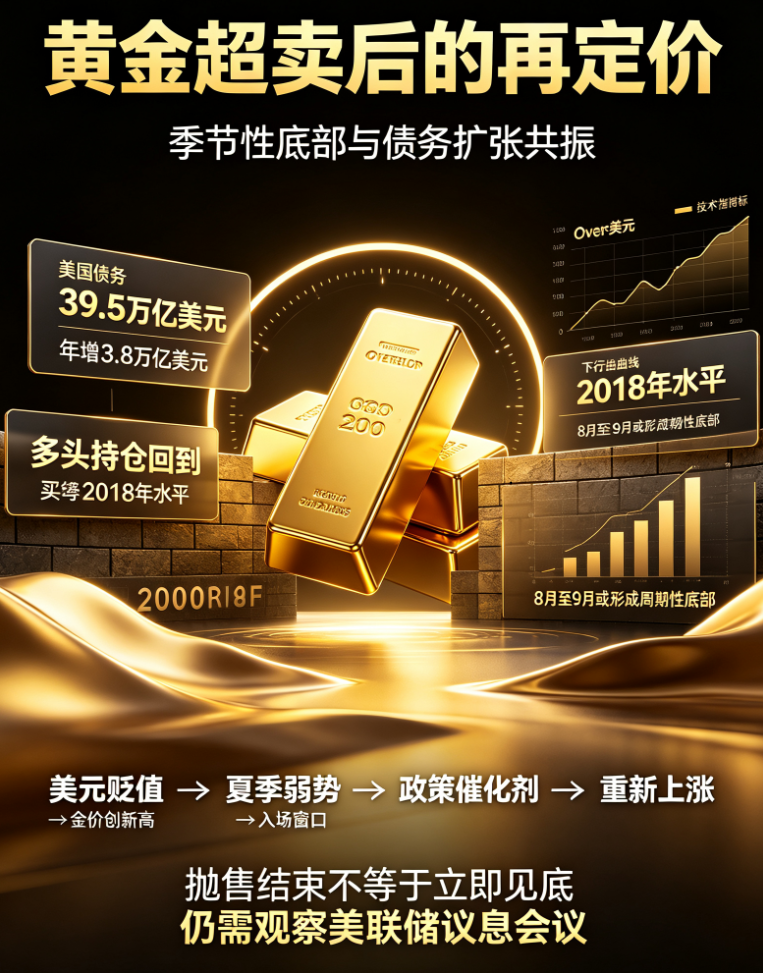
Caption: Schematic diagram of recent gold price trends and key technical indicators. When multiple indicators converge into oversold territory, it often signals that market sentiment has reached an extreme, laying the foundation for a subsequent price reversal.
This market characteristic aligns with gold's seasonal patterns. Historical data shows that international gold prices typically undergo a period of weak consolidation in the summer, eventually forming a cyclical bottom around early August each year. Paul Wang further notes that the current market environment may be repeating this classic cycle. If the recent sharp pullback is indeed approaching a bottom, then for long-term investors, the current seasonal weakness may present a strategic opportunity to build positions.
Dollar Depreciation is Core Driver, Debt Crisis Provides Long-term Support for Gold
After establishing the bottom logic, we need to explore the fundamental drivers for gold's next upward wave. Among various factors, Paul Wang places "dollar depreciation" at the center. He points out that while gold prices are influenced by market sentiment and positioning in the short term, the persistent decline in the dollar's purchasing power is the fundamental, long-term force driving international gold prices to new highs and will continue to break historical records.
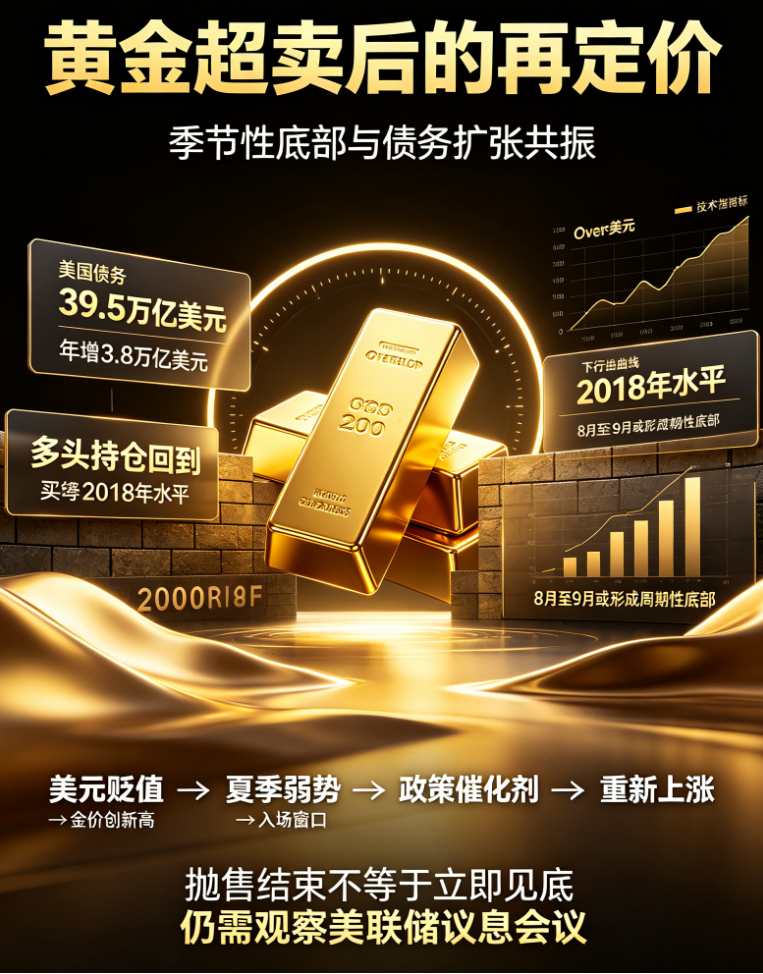
This assessment aligns closely with the current U.S. fiscal situation. Paul Wang cites key data in his analysis: the total U.S. federal government debt has surged to approximately $39.5 trillion, adding $3.8 trillion in the past year alone, a growth of nearly 10%. This rapid expansion of debt, combined with a lack of clear and effective solutions from the government, inherently drives long-term currency depreciation. In this macro context, gold's core value as a traditional hard asset against currency depreciation and sovereign credit risk is increasingly highlighted. Paul Wang asserts: "Gold will be the ultimate beneficiary."
Historical Precedents and Catalyst Expectations
Markets need a catalyst to ignite a rally. Paul Wang recalls the market scenario in early August 2025: with the Jackson Hole global central bank symposium, market expectations shifted, realizing the Fed would pause rate hikes. International gold prices subsequently surged from a cyclical low of $3,200/oz to over $4,300/oz. This price breakout pattern is highly likely to repeat this year.
Looking ahead to the upcoming Fed meeting and potential interest rate policies for the remainder of 2026, the market is seeking a new balance. Currently, CFTC gold long positioning has fallen to levels seen in 2018, typically a sign of extreme pessimism and complete liquidation. Meanwhile, central banks and investors from emerging economies are steadily accumulating gold ETFs, providing a solid long-term demand base. Any unexpected policy signal, such as the Fed hinting at slowing or ending its balance sheet reduction, or even beginning to discuss rate cuts, could become the "trigger" for gold's next rally.
Conclusion: Strategic Timing Approaches
Combining Paul Wang's views, the current gold market is in a critical cyclical bottom zone. Severe technical oversold conditions, historical seasonal weakness, and extremely bearish positioning together constitute a potential trough. Meanwhile, the long-term dollar depreciation trend, the U.S.'s persistent debt issues, and continued gold buying by emerging markets provide solid long-term support for gold prices.
For investors, while one cannot assert that prices will bottom immediately, as Paul Wang suggests, when most selling has concluded and market panic gradually dissipates, this is a strategic observation period requiring close attention. Investors should prepare adequately and wait for a clear catalyst event. When it appears, the gold market is expected to replicate the rally of last August, starting a new upward trend. Now may be the time to plant the seeds for gold.