Singapore Gold and Silver Inventory Decline Triggers Price Volatility, SGX Delivery Premium Hits All-Time High
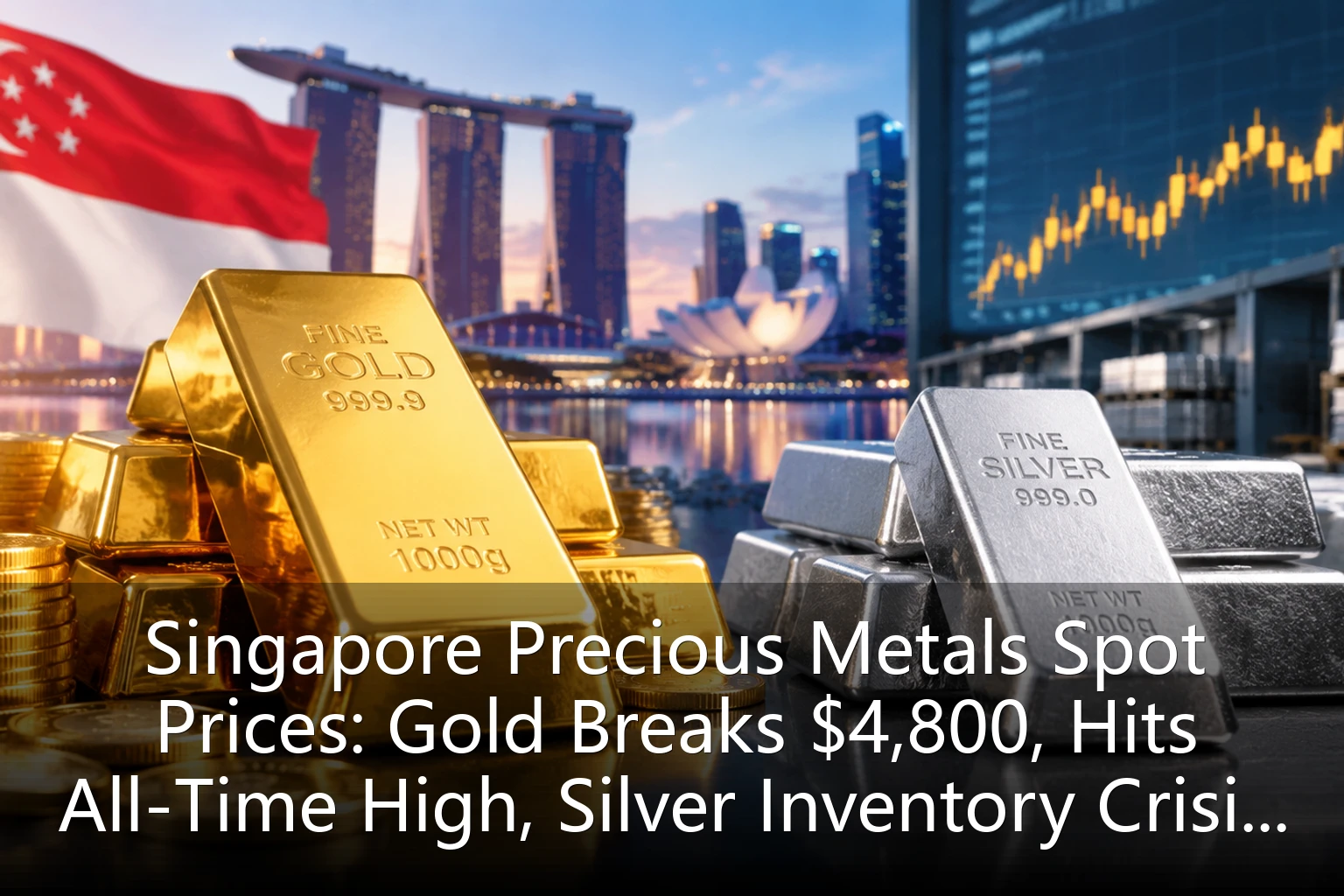
On October 4, 2026, Singapore's gold and silver market experienced a new round of price volatility. Latest data shows significant changes in gold and silver inventory data at the Singapore Gold Exchange (SGX), with silver inventory dropping sharply by 35% compared to the previous month, causing market delivery premiums to surge to historical highs. This change has not only affected the spot price trends of gold and silver but also transmitted important supply and demand signals to the market, providing valuable reference for investors.
Interpreting Gold and Silver Inventory Data: Market Supply-Demand Landscape Quietly Shifting
According to the latest inventory data released by the Singapore Gold and Silver Exchange, as of early October 2026, SGX gold inventory remained at relatively stable levels, but silver inventory showed a surprising 35% decrease. This data change has broken the relative balance in the gold and silver market over the past few months, attracting widespread market attention.
Gold and silver inventory data is an important indicator reflecting market supply and demand conditions. When inventory declines, it usually indicates strong market demand or limited supply, which often leads to price increases. Especially in the silver market, the dual attributes of industrial demand and investment demand make its inventory changes more significant in affecting prices.
Analysts point out that the sharp decline in silver inventory this time is mainly affected by three factors: first, the continuous expansion of the global photovoltaic industry has significantly increased demand for industrial-grade silver; second, the demand for silver as an inflation hedge tool in the investment market has risen; finally, supply from major silver-producing countries is limited, leading to reduced silver flowing into the Singapore market.
SGX Delivery Premium Surge: Market Signal Interpretation
Accompanying the inventory data is a significant increase in SGX gold and silver delivery premiums. Data shows that silver delivery premiums have surged to the highest level in nearly five years, while gold delivery premiums have also risen simultaneously. This phenomenon indicates that the physical supply of gold and silver in the market is tightening, and investor demand for physical gold and silver far exceeds current supply capacity.
Delivery premium refers to the portion where the actual payment price is higher than the futures contract price during physical delivery. This indicator reflects the tightness of the physical gold and silver market. When delivery premiums rise, it usually suggests that the market may face short-term supply shortages, or investor demand for physical gold and silver as a safe-haven asset is increasing.
As an important gold and silver trading center in Asia, Singapore's SGX delivery data is regarded as an important barometer for the regional gold and silver market. The current surge in delivery premiums indicates that demand for physical gold and silver in the Asian region is significantly increasing, which may signal profound changes in the global gold and silver market landscape.
Gold and Silver Price Trend Analysis: How Inventory Changes Affect Prices
There is a close correlation between inventory data and prices. Historical data shows that gold and silver inventory changes often lead to price movements, providing forward-looking market signals for investors. After the sharp decline in silver inventory, silver prices have shown significant increases, while gold prices, although relatively stable, have also shown an upward trend.
From a technical analysis perspective, gold prices have stabilized above the $4,800 mark, showing strong support. Silver prices, due to inventory tightness, have shown stronger performance and may continue to benefit from the supply-demand imbalance in the short term. Notably, the gold-silver ratio has fallen below 70, a level that is usually regarded as a signal that silver is relatively undervalued compared to gold, which may provide additional upward momentum for silver.
Market analysts believe that the current gold and silver price trends are mainly driven by fundamental factors, including inventory changes, supply-demand relationships, and macroeconomic environment. Unlike purely speculative price fluctuations, fundamental-driven price changes tend to be more sustainable, providing more favorable allocation timing for long-term investors.
Fund Flow Analysis: How Institutional Investors Are Responding
SGX metal fund flow data shows significant capital inflows into the gold and silver market recently. Especially, silver ETF holdings have increased significantly, indicating that institutional investors' allocation demand for silver is rising. At the same time, gold futures positions have also shown a net growth trend, showing that investors' preference for gold as a safe-haven asset remains strong.
Fund flow is an important indicator for judging market sentiment. The current capital inflow in the gold and silver market reflects investors' recognition of precious metals as asset allocation tools. Especially against the backdrop of increasing global economic uncertainty, the value of gold and silver as safe-haven assets has once again become prominent, attracting a large amount of institutional capital inflow.
Notably, there are significant differences in position strategies among different investors. Hedge funds are more inclined to use gold and silver price fluctuations for short-term trading, while long-term institutions such as pension funds and insurance companies are more inclined to include gold and silver as part of their asset allocation to hedge against inflation and geopolitical risks.
Expert Views: Future Outlook for the Gold and Silver Market
Several market experts have commented on the current gold and silver market situation. They believe that in the short term, the gold and silver market may continue to be affected by tight inventory and high delivery premiums, with prices expected to remain strong. However, the long-term trend still depends on the global economic environment and monetary policy direction.
Li Ming, Chairman of the Singapore Gold and Silver Trading Association, said: "The current changes in the gold and silver market reflect that investor demand for physical assets is rising. Against the backdrop of increasing global inflation pressure and geopolitical risks, the value of gold and silver as safe-haven assets will further highlight. It is recommended that investors pay attention to inventory data changes and allocate gold and silver assets reasonably."
Wang Hua, a senior precious metals analyst, pointed out: "The phenomenon of sharp decline in silver inventory and surge in delivery premiums deserves attention. This may indicate that the silver market is undergoing a structural change, and the dual driving forces of industrial demand and investment demand may make silver perform better than gold in the coming period. Investors can appropriately increase the proportion of silver allocation."
Investment Strategy: How to Respond to the Current Gold and Silver Market
In the face of current changes in the gold and silver market, investors need to formulate reasonable investment strategies. Here are some practical allocation suggestions:
- Pay attention to inventory data changes: Regularly track SGX gold and silver inventory data, as inventory declines often signal opportunities for price increases.
- Reasonably allocate gold and silver ratios: Considering that the gold-silver ratio is at a relatively low level, the proportion of silver allocation can be appropriately increased, but attention should be paid to the high volatility characteristics of silver.
- Utilize delivery premium signals: When delivery premiums rise, physical gold and silver investment may become more attractive, but liquidity risks need to be noted.
- Diversify investment channels: In addition to the futures market, consider various investment channels such as physical gold and silver, gold and silver ETFs, to reduce single-market risks.
- Adopt a long-term allocation perspective: Treat gold and silver as part of asset allocation rather than short-term speculative tools to obtain long-term stable safe-haven returns.
Risk Warnings: Key Factors Investors Need to Pay Attention To
Although the outlook for the gold and silver market is positive, investors still need to pay attention to the following risk factors:
- US dollar exchange rate changes: Gold and silver prices are usually negatively correlated with the US dollar exchange rate, and a stronger dollar may put pressure on gold and silver prices.
- Monetary policy adjustments: Changes in monetary policy by central banks may affect gold and silver prices, especially expectations of Federal Reserve interest rate hikes.
- Geopolitical risks: Although geopolitical risks are usually beneficial to gold and silver, sudden events may also cause market panic and trigger price fluctuations.
- Market liquidity: When market volatility increases, liquidity in the gold and silver market may decrease, affecting trade execution.
- Technical adjustments: After rapid price increases, technical corrections may occur, and investors need to do good position management.
Conclusion: Seizing the Gold and Silver Allocation Window
The current gold and silver market is at a critical turning point, with inventory data changes and surging delivery premiums providing important market signals for investors. Against the backdrop of increasing global economic uncertainty, the value of gold and silver as safe-haven assets has once again become prominent, providing valuable allocation opportunities for investors.
It is recommended that investors closely monitor changes in SGX gold and silver inventory data, reasonably allocate gold and silver asset ratios, and adopt diversified investment strategies. At the same time, be alert to market volatility risks, do good risk management, and obtain long-term stable investment returns.
As the global economic situation evolves, the gold and silver market will continue to play its important asset allocation function. For investors, the current time is an opportune moment to re-examine gold and silver asset allocation and seize market opportunities. On the premise of controllable risks, appropriately increasing gold and silver asset allocation is expected to obtain considerable returns in future market changes.
(This article is originally published by Xin Jin Hui Xun Network, please indicate the source when reprint)